

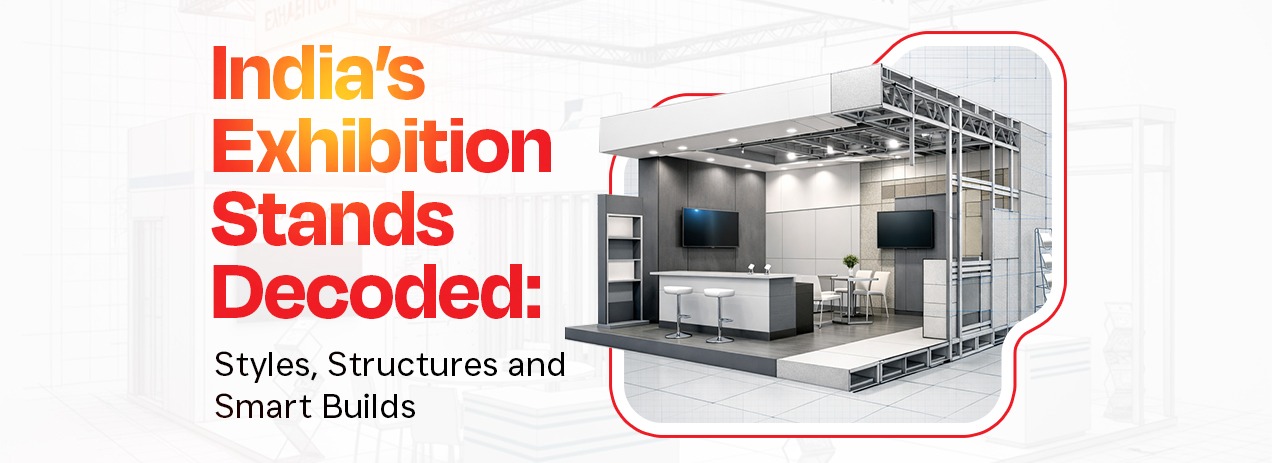
India’s exhibition scene has exploded over the last decade. More shows, more cities, more competition. And in that crowd, your exhibition stand is doing a job your team can’t always do — it’s attracting attention before a single word is spoken, building trust before a single handshake happens.
But here’s the thing most exhibitors miss: a great stand isn’t about spending the most money. It’s about making the right choices — the right style, the right structure, the right experience for your audience.
1. Why Exhibition Stands Matter More Than Ever in India:
India is now one of the fastest-growing exhibition markets in Asia. According to the India Exhibition Industry Association (IEIA), the sector contributes significantly to the MICE (Meetings, Incentives, Conferences & Exhibitions) economy, drawing lakhs of visitors and thousands of global exhibitors annually.
With competition intensifying at every show, brands can no longer rely solely on products or pamphlets. Visitors make split-second judgments — and the stand design is the first impression that either pulls them in or pushes them past.
A well-designed stand communicates:
1.Brand identity at a glance
2.Product credibility through space and finish
3. Engagement intent through layout and interactivity
4. Seriousness of investment in the market
2. The Main Types of Exhibition Stands in India
a) Shell Scheme Stands
Shell scheme stands are the most common entry-level option at Indian trade shows. Organisers provide a basic framework — aluminium poles, infill panels, a fascia board with your company name, basic lighting, and a carpet. Exhibitors then dress this skeleton with graphics, furniture, and displays.
Best suited for:
First-time exhibitors, SMEs, regional expos, and those with tight budgets.
Pros:
Cost-effective, quick setup, no need for a separate contractor.
Cons:
Generic appearance, limited creative freedom, hard to stand out in a row of similar booths.
b) Custom-Built Stands
Custom-built stands are designed and fabricated from scratch to match a brand’s exact requirements. Every element — from the flooring to the ceiling structure, lighting rigs to interactive counters — is purpose-built.
Best suited for:
Large corporates, product launches, flagship participation at events like Auto Expo, CII summits, or Convergence India.
Pros: :
Completely unique, high visual impact, full control over brand experience.
Cons:
Higher cost, longer lead time, requires experienced stand builders and project managers.
c) Modular Exhibition Stands
Modular stands use a system of pre-engineered aluminium extrusions and interchangeable components that can be assembled into different configurations. They strike the perfect balance between customisation and cost-efficiency.
Best suited for:
Mid-sized companies that participate in multiple shows annually and want a reusable system that can be reconfigured for different booth sizes.
Pros:
Reusable, reconfigurable, easy to transport, quick installation, eco-friendly.
Cons:
Less dramatic than fully custom builds; premium modular systems can still be pricey upfront.
d) Portable & Pop-Up Stands
These are lightweight, easy-to-carry solutions — fabric pop-up displays, roller banners, tension fabric frames, and tabletop exhibits. They are especially popular at smaller Indian conferences, seminars, and local trade events.
Best suited for:
Startups, solo exhibitors, roadshows, and events where logistics are limited.
Pros:
Extremely portable, no professional assembly needed, budget-friendly.
Cons:
Not suitable for large spaces; limited presence and brand authority.
e) Double-Decker Stands
As Indian exhibitions grow in scale and ambition, double-decker stands are becoming a status symbol at premium shows. These two-storey structures allow brands to host private meeting rooms, VIP lounges, or product demo zones on the upper floor while maintaining an active open engagement area below.
Best suited for:
Large-footprint exhibitors at premium events — automobile brands, real estate developers, defence companies, and tech giants.
Pros:
Massive visual impact, maximises floor space vertically, creates private meeting zones..
Cons:
Requires structural approval from organisers, high cost, complex engineering.
f) Island Stands (Open-Space Stands)
An island stand is accessible from all four sides, making it the most open and inviting type of exhibition stand. These are typically allocated to anchor exhibitors or brands that book large square-meterage.
Best suited for:
Brands that want maximum footfall, product showcases with 360-degree visibility, and immersive experiences.
Pros:
High traffic potential, flexible layout, strong brand dominance.
Cons:
Requires larger budget and more detailed design planning.
3. Structural Materials Used in Indian Exhibition Stands:
The quality and choice of materials directly impacts the look, durability, and transportability of your stand. Here are the most widely used materials in the Indian market:
Aluminium Extrusion Systems are the backbone of modular stands. Lightweight, strong, and reusable — they are the industry standard for portable and semi-custom builds.
MDF (Medium Density Fibreboard) is the go-to for custom-built elements — counters, plinths, wall panels, and furniture. It holds finishes well and can be cut into any shape.
Fabric Graphics (SEG — Silicone Edge Graphics) have rapidly replaced rigid printed panels in India. Fabric prints are vibrant, lightweight, and far easier to transport. SEG systems allow fabric to be stretched seamlessly over aluminium frames.
Steel and RCC are used in heavy-duty double-decker structures where structural load-bearing certification is required.
Acrylic and Glass add premium finishes — used for display cases, branded signage, countertops, and feature walls in high-end stands.
LED Panels and Lightboxes are now essential rather than optional. Backlit graphics, LED walls for video content, and programmable accent lighting dramatically elevate stand quality.
’
4. Smart Build Strategies for Indian Exhibitions
Building smart doesn’t always mean spending more. Here are the strategies that experienced Indian exhibitors use to maximise impact at every budget level:
Plan for Multiple Events, Not Just One. If you exhibit two or more times a year, invest in a modular system that can be reconfigured. The per-event cost drops significantly, and the quality improves over time.
Prioritise the First Three Seconds. Studies show that visitors decide whether to enter a stand within moments of seeing it. Your brand name, key message, and visual hook must be visible from a distance. Avoid clutter at eye level.
Use Vertical Space Aggressively. Indian exhibition halls have significant ceiling heights, yet most exhibitors barely use anything above two metres. Tall structures, hanging signs, and elevated branding help you get noticed from across the hall.
Build for Engagement, Not Just Display. Touchscreen kiosks, product demo zones, live counters, and games dramatically increase dwell time. The longer a visitor stays, the more likely they are to convert..
Conclusion:
India’s exhibition industry is not just growing — it is evolving. Exhibitors who continue to treat their stand as a simple backdrop will keep blending into the crowd. Those who understand that an exhibition stand is a strategic business tool — a physical extension of their brand — will consistently walk away with stronger leads, better partnerships, and lasting impressions.