

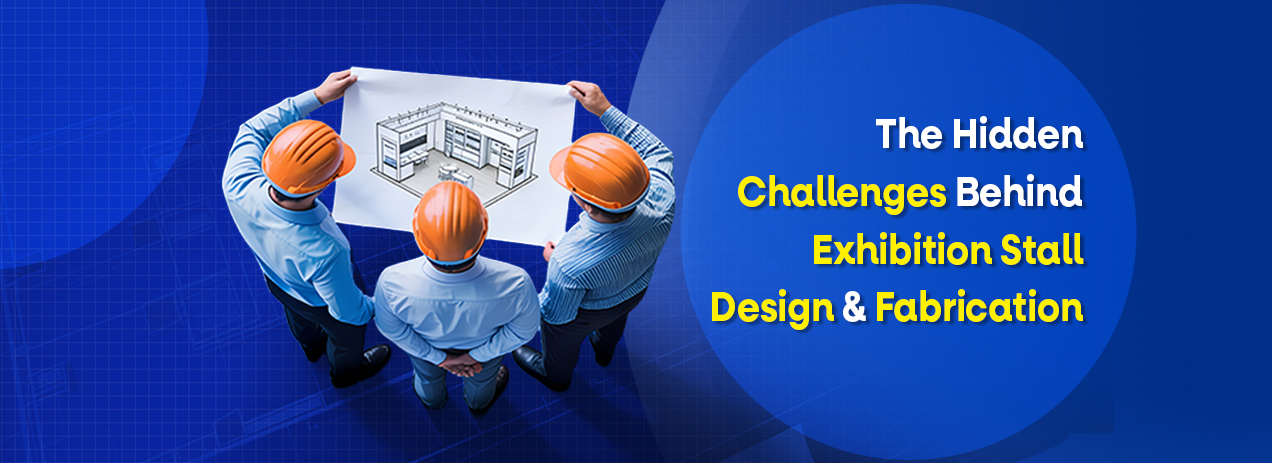
Exhibition stalls are the face of your brand at trade shows, yet their creation involves far more complexity than meets the eye. Behind every stunning booth lies a maze of logistical nightmares, budget constraints, and tight deadlines that can derail even the most promising designs. From navigating venue regulations to coordinating multiple vendors, the path from concept to completion is fraught with obstacles.
Understanding these hidden challenges is crucial for anyone planning to make a lasting impression on the exhibition floor.
1. Delayed decision-making from exhibitors:
Many exhibitors typically make decisions regarding stall design and graphics at eleventh hour. Due to delayed design approvals, fabricators often face significant time constraints during the workshop phase. Such delayed decision-making inevitably compromises both quality and adherence to deadlines. To ensure premium quality and on-time delivery, moving the decision-making process earlier is essential to avoid the compromises inherent in last-minute production.
2. Expertise and Competence:
Exhibition stall design demands specialized expertise that takes a long-term commitment to the craft. Consequently, identifying talent capable of balancing high-impact visuals with practical, real-world execution remains a significant hurdle for many firms.
3. Tailored Solutions:
Modifying standard booth frameworks and components to fit particular spatial constraints, budget parameters, and functional needs. This approach balances efficiency with individual client demands for a perfect-fit solution.
4. Fine-Point Perfection:
Overlooking minor specifications can cascade into major installation failures. A misaligned measurement by mere millimeters, incorrect wire gauge, or wrong material finish often goes unnoticed until on-site assembly, when corrections become exponentially expensive and time-consuming.
5. Cross-Team Coordination :
Exhibition projects involve designers, fabricators, electricians, graphic producers, and logistics teams who rarely share the same workspace or schedule. Information silos develop quickly, causing one department to proceed with outdated specifications while another has already moved forward with revisions.
6. Budget Management :
Design changes mid-project devastate budgets as fabricators discard completed work and restart with new specifications. Each revision cycle adds material waste, labor redundancy, and timeline delays that compound costs exponentially while clients resist paying for consequences of their indecision.
7. Deadline Adherence :
Exhibition timelines are non-negotiable—the show opens whether the stall is ready or not. Yet material shipments arrive late, approvals get delayed, and fabrication issues emerge at the worst moments, leaving teams scrambling with impossible catch-up schedules that guarantee overtime chaos and quality compromises.
8. Turnkey Implementation:
Single-source responsibility eliminates finger-pointing but concentrates all risk with one vendor. When comprehensive providers fail, clients have no backup options, alternative suppliers, or specialized experts to rescue failing projects since they’ve committed everything to one basket.
Conclusion :
The exhibition stall industry’s hidden challenges—from expertise gaps and budget overruns to impossible deadlines and coordination failures—reveal why successful booth execution remains so elusive. Yet understanding these obstacles transforms them from insurmountable barriers into manageable risks.
The key lies not in finding perfect vendors who never face these issues, but in partnering with experienced professionals who anticipate problems, communicate transparently, and maintain contingency plans. Success in exhibition design isn’t about avoiding challenges; it’s about working with teams skilled enough to navigate them effectively.